Sealcoating in Lafayette, Indiana
Call (574) 230-5996 for a free estimate.
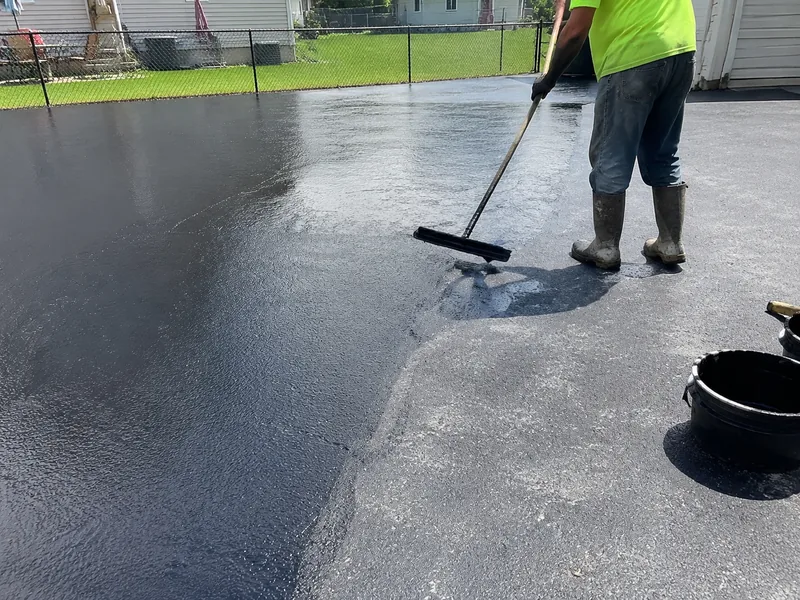
Why does a five-year-old driveway look gray and tired while the neighbor's ten-year-old driveway still looks black? Sealer. Asphalt binder oxidizes in the sun and washes out with water and road salt, and once the binder goes, the stones start coming loose and cracks follow. Sealcoating replaces that sacrificial layer for a few hundred dollars instead of a few thousand.
Timing rules we actually follow: brand-new asphalt cures for at least a full summer before its first seal. Sealing season here runs roughly May through September because the material needs warm nights to cure. And we do not seal the day before rain, which sounds obvious until you hear the stories.
Done every 3 to 4 years, sealcoating can roughly double the life of a driveway. Done every year, it builds a flaky crust, so we will not sell you that schedule no matter how much you like the fresh black look.
Get Your Free Estimate
What Sealcoat Actually Is (And Is Not)
Sealer is a thin engineered coating, an asphalt-emulsion blend fortified with fine sand for traction and polymer additives for flexibility, squeegeed over the surface at about the thickness of a credit card. Think of it the way paint protects wood siding: a sacrificial skin that takes the UV, the water, and the winter salt so the material underneath does not have to. It restores the deep black color as a side effect, but the color is the cosmetic part. The job is chemistry: keeping the sun from oxidizing the binder that holds your driveway's stone together.
What it is not: structural. Sealer will not fill cracks (that is crack sealing, a different material and machine), will not flatten heaves, and will not rescue pavement whose base is failing. A contractor who quotes sealer over alligatored asphalt is selling you paint for a broken bone.
One material note worth knowing: the old-school sealer was coal tar, which is now banned in a growing list of states because of PAH runoff concerns. We run asphalt-based emulsion, it performs comparably, smells far less, and does not leave you with a surface that may need explaining at resale.
Our Process, Step by Step
- Surface cleaned with wire brooms and blowers, because sealer bonds to asphalt, not to dust.
- Oil and fuel spots primed, otherwise the sealer beads up over them and peels by spring.
- Edges cut in by hand along garage floors, sidewalks and lawns, the machine work stays off your concrete.
- Two coats squeegee-applied on driveways and traffic lanes, working the material into the surface texture rather than misting it on top.
- Barricade tape up, and the surface rests 24 to 48 hours before traffic.
What Sealcoating Costs and Returns
Around Lafayette, $0.20 to $0.40 per square foot, so a typical driveway lands in the $150 to $350 range and most commercial lots in the low thousands. Against that, an unsealed driveway in this climate often needs replacement 8 to 10 years sooner than a maintained one. Run the arithmetic on a $6,000 driveway and sealing every few years is one of the better returns in home maintenance. It is also, fair warning, the service the driveway scammers love most, cheap product sprayed thin looks identical to quality work for about six weeks. The red flags section of our cost guide applies double here.
DIY vs Hiring It Out
Honest answer: a fit homeowner with a small, simple driveway can DIY with big-box sealer and a squeegee for the cost of materials, and for some people that Saturday is satisfying. The trade-offs are product grade (retail sealer is diluted for spreadability and typically lasts 1 to 2 years against 3 to 4 for commercial-grade), prep equipment, and your back. Where DIY goes wrong is skipping prep and sealing over dirt or damp pavement, which peels. If you do it yourself, clean like you mean it and watch the overnight temperatures.
Frequently Asked Questions
How long until we can use the driveway after sealing?
Stay off it with vehicles 24 to 48 hours depending on weather. Foot traffic is fine after a few hours in good sun.
How much does sealcoating cost?
Around $0.20 to $0.40 per square foot locally. Most driveways land between $150 and $350, small commercial lots in the low thousands. Crack sealing beforehand is quoted separately by the linear foot.
How often should I sealcoat?
Every 3 to 4 years. Annual sealing is a myth that builds up a flaky layer, we will not sell it to you.
My driveway is cracked. Will sealer fix it?
No, and anyone who says otherwise wants your deposit. Cracks need hot rubberized crack sealant first, then sealer over the top protects the whole surface. We quote them together when both are due.
Do you seal in cool weather?
No. Sealer cures poorly below about 55 degrees, so our season is roughly May through September. We keep a spring wait-list that fills in date order.
Need Sealcoating in Lafayette? Contact us today for honest, affordable prices.
Call (574) 230-5996