Parking Lot Striping in Lafayette
Call (574) 230-5996 for a free estimate.
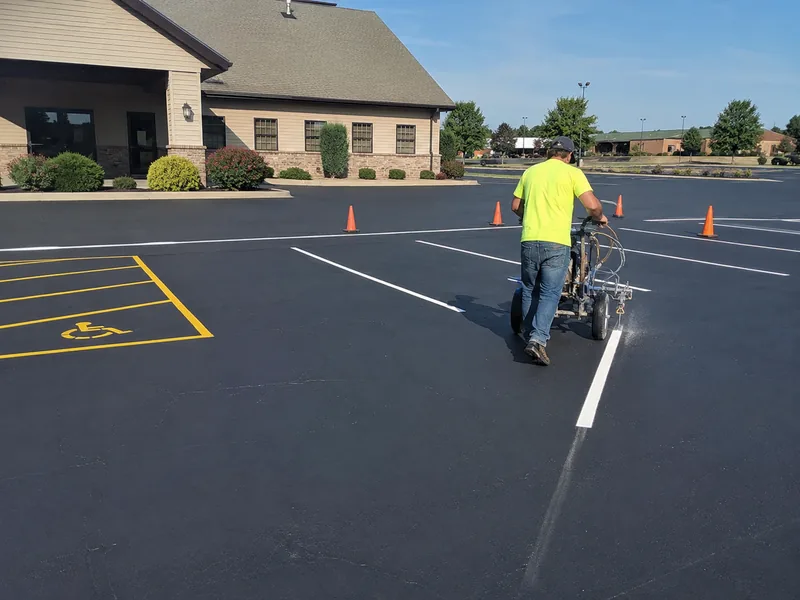
Striping is the cheapest improvement a commercial property can buy. Same asphalt, same building, crisp new lines, and the whole lot suddenly reads as maintained. It also has teeth: faded accessible-parking markings are a compliance problem, and unmarked fire lanes can hold up an occupancy inspection.
We stripe new layouts and refresh existing ones with airless machines and DOT-grade traffic paint: stalls, hatched no-park zones, fire lanes, crosswalks, directional arrows, cart corrals, curb painting, and numbered or reserved stalls.
Fresh sealcoat plus new stripes is the classic one-two, the lot goes uniformly black and the lines snap against it. Most lots reopen within 48 hours of start.
Get Your Free Estimate
What Goes Into a Compliant, Efficient Layout
Standard stalls in this market run 9 feet wide by 18 deep, with 24-foot two-way drive aisles, tighten any of those numbers and you gain stalls at the cost of door dings and insurance claims, loosen them and you are renting asphalt to nobody. Angle parking (45 or 60 degree) fits more cars on narrow lots and forces one-way flow, which some retail owners actually prefer for safety. When we re-layout a lot we draw it before we paint it, and it is not unusual to find 5 to 10 percent more capacity hiding in a decades-old layout, legally.
The ADA portion has hard numbers attached: roughly one accessible stall per 25 total, at least one van-accessible with an 8-foot access aisle, signage mounted at height, and surface slopes under 2 percent in all directions. That last one is the sleeper, a perfectly painted accessible stall on a 4 percent slope is still a violation, and it is why striping and pavement work belong in the same conversation.
Paint, Explained Briefly
Water-borne traffic paint is the standard for lots: fast-drying, bright, budget-friendly, good for 2 to 4 years of Indiana weather and plowing. Thermoplastic, the melted-on material used for street crosswalks, lasts several times longer and costs several times more, we recommend it selectively, for high-wear arrows and crosswalks on busy commercial sites rather than whole lots. Fire lane and curb work uses the same paints in regulation colors. If a bid does not name the paint type, it is water-borne, priced like thermoplastic.
Scheduling Around a Working Business
Striping is the fastest trade on the lot and the easiest to schedule painlessly. Most jobs happen early morning or weekend, sections cone off for an hour or two while paint dries, and the lot never fully closes. New stripes over fresh sealcoat get scheduled the day after the sealer cures, one visit disruption, two services done. For multi-tenant properties we notify by section so nobody's customers arrive to surprise cones.
Frequently Asked Questions
How long does striping take?
Most lots are striped in a few hours and drivable in one to two hours after the last line in good weather.
How often should a lot be re-striped?
Every 2 to 4 years with water-borne paint, or whenever lines stop reading clearly from a moving car, plows and sun do most of the erasing. Lots on a sealcoat cycle usually just re-stripe with each seal.
How many accessible spaces does my lot need?
It scales with total stall count, roughly one accessible space per 25 stalls at the small end, with van-accessible requirements on top. We will count your lot and quote the compliant layout.
What does striping cost?
Re-stripes on an existing layout typically price per stall and land in the hundreds for small lots, low thousands for large ones. New layouts and ADA corrections quote after a walk-through, which is free and takes half an hour.
Need Parking Lot Striping in Lafayette? Contact us today for honest, affordable prices.
Call (574) 230-5996