Gravel to Asphalt Driveway Conversion
Call (574) 230-5996 for a free estimate.
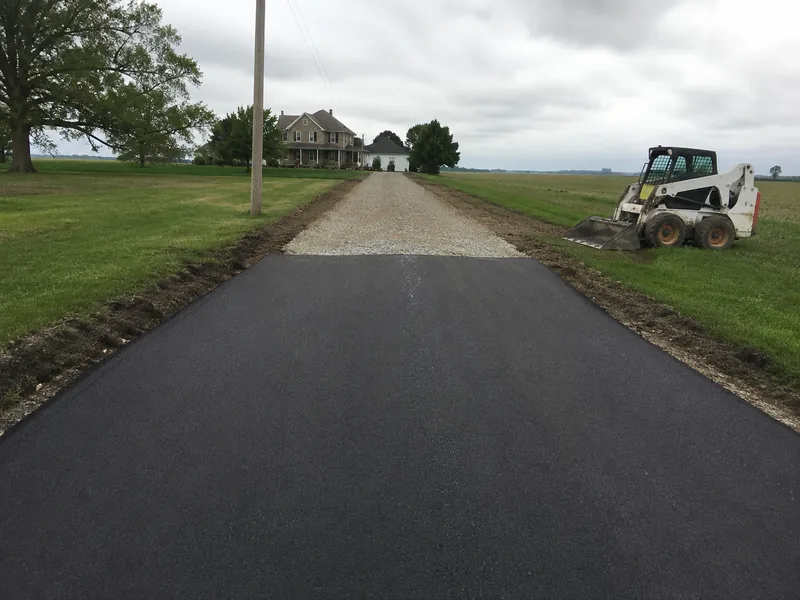
Gravel is cheap right up until you own it for a decade. Re-grading every spring, fresh stone every couple of years, dust on everything all summer, washboard that rattles your truck, and the snow blade throwing half the driveway into the yard every winter. The families we pave for out in the townships almost always say the same thing afterward: should have done it years ago.
The conversion is more straightforward than people expect, because a well-settled gravel drive has already done part of the work. That compacted gravel becomes the foundation. We regrade it, fix the crown and drainage, add stone where the base runs thin, compact everything, and pave.
Long rural lanes are our favorite jobs. One out by Americus took us from rutted gravel to 900 feet of smooth blacktop in two days, and the owner reports the school bus now comes all the way up.
Get Your Free Estimate
The Conversion, Step by Step
- Walk the lane. We check base depth with a probe bar, find the soft spots you already know by heart from mud season, and inspect every culvert crossing. Undersized or crushed culverts get replaced before paving, never after.
- Regrade and crown. The existing gravel is reshaped with a proper crown so water sheds to the sides instead of channeling down the middle. Ditching gets cleaned up where the sides have silted level.
- Supplement and compact. Fresh crushed limestone where the base runs thin, then the whole lane compacted in lifts with a vibratory roller. A decade of truck traffic has pre-compacted most old lanes beautifully, that is the money your years of gravel bought.
- Pave. Machine-laid hot mix, 3 inches compacted for car and pickup lanes, more where grain trucks or heavy equipment run. Edges hand-finished with a clean bevel.
A typical 400-to-900-foot lane is a two-day job. You drive on it three days later, and you park the box blade permanently.
What Conversion Costs, and What Gravel Was Already Costing You
Local range: $3.50 to $6.50 per square foot depending on lane length, base condition, and access, with long lanes earning the best unit pricing. Before you flinch at the total, add up the gravel side of the ledger: a fresh load of stone every year or two, grading visits or your own Saturday on the tractor, the car washes, the gravel raked out of the lawn every April, and the slow scatter of your driveway into the ditch. Most owners we convert were spending several hundred dollars a year plus labor to keep a surface that was never smooth in the first place. Asphalt flips that to near-zero annual upkeep, a crack check after hard winters and a sealcoat every few years.
What About Tar and Chip?
Fair question, we get it a lot on rural jobs. Chip seal (tar and chip) sprays hot liquid asphalt over the compacted base and rolls stone chips into it. It costs less up front than hot mix, roughly half, has a pleasant country look, and hides small defects well. The trade-offs: a 7-to-10-year life against 20-plus for hot mix, loose chips for the first months, it cannot be plowed as aggressively, and repairs are less tidy. For a long, lightly used farm lane on a budget it is a legitimate option and we will quote it side by side with hot mix if you ask. For the stretch near the house, where you walk, plow, and back the trailer, hot mix earns its premium.
Timing a Conversion Right
The one mistake to avoid: paving over gravel that was placed weeks ago. Fresh stone needs either a season of settling or serious mechanical compaction before it will hold pavement, and a crew willing to pave over fluffy new gravel is a crew planning to be unreachable next spring. If your lane needs substantial new base, we sequence the work, stone now, pave after it has been driven and compacted, and we tell you that plan up front. Spring bookings for summer paving fit that sequence perfectly.
Frequently Asked Questions
Can you pave right over my gravel?
Mostly, yes, and that existing gravel is a cost saver. We regrade and compact it, supplement thin spots, and pave. What we will not do is pave over fresh, uncompacted stone, that needs a season to settle or mechanical compaction.
What does converting a gravel driveway cost?
Typically a bit less than paving from bare dirt since your base is partly built. For most Lafayette-area conversions, think in the $3.50 to $6.50 per square foot range depending on length, base condition and access. Long lanes get better unit pricing.
Will it handle farm equipment?
It will if we build it for that. Tell us what drives on it, harvest traffic changes the design, not just the price.
Does asphalt help resale on a rural property?
Agents around here will tell you a paved lane is one of the first things rural buyers comment on, it signals a maintained property before anyone reaches the house. It also ends the annual gravel line item, which buyers notice too.
Need Gravel to Asphalt Conversion in Lafayette? Contact us today for honest, affordable prices.
Call (574) 230-5996